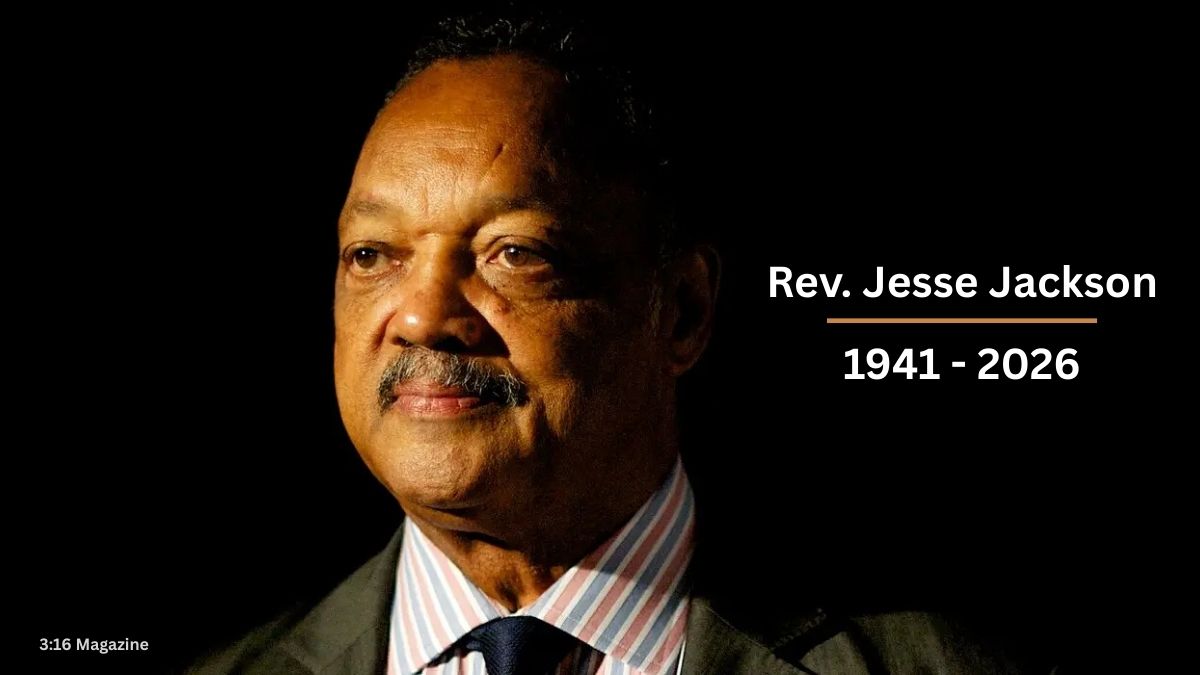
The Rev. Jesse Jackson, an American civil rights leader, minister, and politician, who was a protégé of Martin Luther King Jr. and in the 1980s reshaped Democratic politics with two galvanizing presidential campaigns, died Tuesday at the age of 84.
“Our father was a servant leader — not only to our family, but to the oppressed, the voiceless, and the overlooked around the world,” the Jackson family said in a statement. “We shared him with the world, and in return, the world became part of our extended family.”
According to the Jackson family, public commemorations will take place in Chicago.
Jackson was born Oct. 8, 1941, in a tiny house in Greenville, S.C., where he began his lifelong work fighting for civil rights.
While visiting home for Christmas break during his freshman year at the University of Illinois, Jackson needed to borrow a book but couldn’t get it from the town’s white-only library. Six months later, on July 16, 1960, he and seven other students held a sit-in at the library and were arrested for protesting. After his experience as a member of the “Greenville Eight,” Jackson transferred to North Carolina Agricultural & Technical College, a historically Black school in Greensboro, N.C.
His burgeoning activism would bring him in 1965 to march alongside Martin Luther King Jr. and others in Selma, Ala., answering King’s call for supporters of a local voting rights campaign. Jackson became a close ally of King — eventually leaving his graduate studies at the Chicago Theological Seminary to join King’s Southern Christian Leadership Conference. He became the Chicago coordinator and a year later, in 1967, the national leader of the SCLC’s Operation Breadbasket, which was dedicated to improving the economic conditions of Black communities in the U.S.
In April 1968, Jackson traveled with King to Memphis, Tenn., where he witnessed the civil rights leader’s assassination.
King’s death marked the beginning of the end for Jackson’s association with the SCLC. By 1971, he split with the group and formed his own organization, called Operation PUSH. The group continued Jackson’s work to increase Black Americans’ political strength and political opportunities.