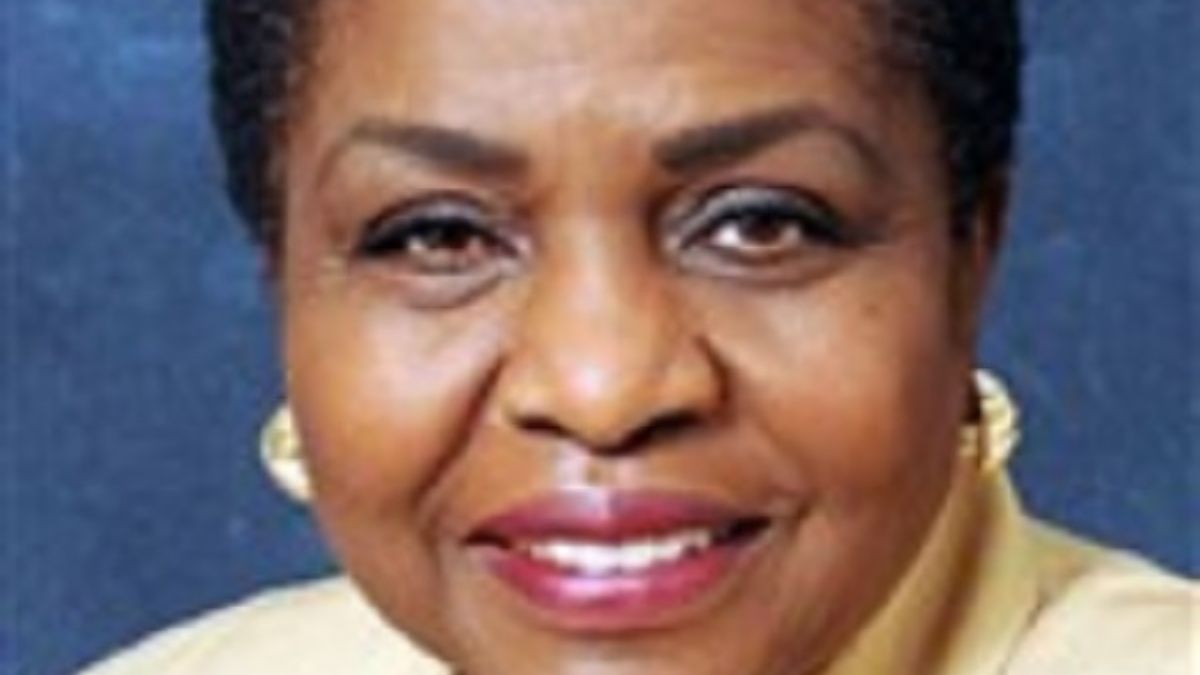
Jo Ann Roberts, PhD, is a retired school administrator with extensive experience in education. She began her career as a speech and language pathologist and quickly advanced through the ranks, eventually becoming an administrator and serving as superintendent of schools in various school districts. She is known for her ability to turn around underperforming schools and has a proven track record of improving student outcomes.
Dr. Roberts is a military brat who had the opportunity to receive a high-quality education in her youth, which shaped her approach to guidance. After graduating with a master’s degree in speech and language pathology, she gained professional experience at a local hospital. Subsequently, Dr. Roberts furthered her academic pursuits by obtaining a doctorate from Northwestern University with high honors.
“I was swiftly promoted to one of the administrators in the Department of Speech and Language Pathology. At the time, Mr. Albert Riggs was our assistant superintendent. After moving to Chicago and witnessing so many disadvantaged children, one of my first tasks was at Algeld Gardens, where I created a high-risk screening program.”
Dr. Roberts submitted a proposal to hire speech and language assistants to work under certified speech and language pathologists with master’s degrees.
Dr. Roberts’s proposal received approval from the state of Illinois, propelling her career forward. She advanced easily through the ranks and eventually became an assistant superintendent.
In addition, Dr. Roberts also became a superintendent in Michigan, where her school received the Presidential Goals 2000 Award from the Department of Education under President George W. Bush, Sr. in 2000.
Dr. Roberts eventually returned to Chicago, serving as Chief Deputy Superintendent under Dr. Argie Johnson, acting as second in command.
Under Dr. Roberts’ leadership, a school she took over went from being ranked 20th to 1st in the district in one year.
Dr. Roberts became the principal of Wacker Elementary School, which, as the children would say, was a “hot mess.” Not knowing much about the community then, She recognized that she had great kids, so Dr. Roberts assembled a team to address the challenges they faced.
“I said, ‘We need to move this school. These kids are not slow; they require the right support. I decided to provide them with the curriculum I experienced in elementary school: pre-algebra in sixth grade, algebra in seventh grade, and geometry in eighth grade. We transformed our library into a reading resource center and hired exceptional teachers.'”
They implemented a requirement for every child to read 20 books a year, ensuring that these books aligned with the curriculum. No matter what subjects they were teaching – math, science, and social studies, staff made sure to incorporate reading material. Their students’ scores improved; the president of the school board came to see Dr. Roberts.
The President of the Board of Education said, “We don’t have a high school in the city ready to take your students.”,
Ultimately, Wacker School progressed from being ranked 20th to 1st in just one year. Dr. Roberts remembers this achievement as it marked the highest progress in the history of the Board of Education. Following this success, her phone began to ring nonstop.
“I struggled to understand why the academic standards in Chicago schools were so low. I expressed my concerns to the teachers at Wacker Elementary School, stating that these standards were insufficient. I emphasized that students would remain trapped in a cycle of low achievement and poor reading skills. I firmly believe that to read well, students must practice reading regularly.”
The political challenges and influence of special interests in the education system
Dr. Roberts learned one thing about educating children. Politics is so ingrained and embedded into the education system of many schools across this country that you have to be able to negotiate to be successful.
She is a strong-willed and self-directed person when it comes to education. Dr. Roberts finds it difficult to consider hiring your son or daughter as she works to build a new school when the students need the money and the resources. Her primary focus was to educate children and establish new schools.
“In his book, “Savage Inequalities”, Jonathan Kozol discusses the politics of education, and I have encountered similar challenges in my leadership role. It seems people would prefer to prioritize family connections over Johnny’s education. I recall a student saying that this was the first time they had received textbooks.”
The recipe for success
Dr. Roberts first takes the children into the auditorium, where she discusses the importance of obtaining a good education and highlights various historical figures. She emphasizes that only 1% of athletes make it to the professional level, so education is essential for achieving success and becoming heroes and sheroes. She tells the children, “I am here because I believe in you. I know you are high achievers, and I know that God does not make mistakes.”
She says, “Many of you are functioning at a level that is comfortable for you, but I know you can do better. I want you to be ambitious and dream big. We will work together to make this school one of the top performers in the city.”
Dr. Roberts meets individually with her teachers to communicate her vision. She acknowledges that some people maybelieve children cannot learn due to their backgrounds, but she aims to challenge that perspective. She told the teachers that they would work together to help their students reach their full potential.
The role of community engagement and parental involvement in school success
They held an open house where Dr. Roberts had the opportunity to meet with parents and introduce herself as the new principal.
“During my conversation, I acknowledged that many of you send your children here to learn while juggling work and other obligations. I understand those realities. I also recognize that some parents may not have a strong interest in their children’s education, and that’s okay too.”
She encouraged those willing to join her in this effort to come forward and sign up. Dr. Roberts understood that some might need time to think about it, and she wanted to be honest—she recognized that not every parent is in a position to commit to this work, and she doesn’t hold that against anyone.
However, Dr. Roberts believes it’s vital to create a space for everyone to acknowledge the upcoming transitions and to empower those who can lead, all while ensuring that no one feels judged.
At Lindblom High School, they faced a critical challenge: addressing the increase in girl gangs and the decline in academic performance among students. This complex issue required focused attention and innovative solutions to create a safer and more supportive environment for all students.
“I told every child at the school during that time, Listen, if you bring those box cutters in here—I didn’t even know what a box cutter was when I got there—I’ll call the paddy wagon, and you’re going to get arrested.”
Dr. Roberts emphasizes the importance of effectively managing children’s behavior. As a result, the students began to excel in the classroom. The staff cleaned and filled the pool with water, allowing the kids to swim during gym class, and also took AP classes to help the students stay focused. Additionally, the school won basketball and football games, which contributed to revitalizing the school spirit.
“If you can run these streets, sell dope, and count dirty money, you are going to get an education in this school. I’ll never forget that year because our students were accepted into the University of Chicago, and the University of Illinois, and a few even went to Ivy League schools. This was during the time, Paul Vallas was the CEO.”
She had a strict rule for every school: everyone had to wear their uniform—there was no option. The parents supported her wholeheartedly, which made a significant difference.
The numbers don’t add up.
“I reviewed the State of Illinois report card on the performance of all students on the required assessment test, including data from Chicago Public Schools. While 83% of students graduate, only 22% are proficient in reading and 19% are proficient in math. This level of performance does not meet my standards, and I cannot tolerate it.”
The spending rate for CPS has risen significantly. In 2019, the spending per student was $20,979, and by 2023, it increased to $29,207, reflecting a 23% increase. However, enrollment has decreased considerably, from 361,314 students in 2019 to approximately 325,305 in 2023.
This raises concerns: more money is being spent on education, yet student performance appears to be dropping.
“Where is the money being spent? Who’s getting the money? What’s behind the deals? And so you have to decide hopefully that with the newly configured school board, there will be changes. I don’t understand how the board that was in place did not ask these questions. They were supposed to be highly educated, skilled people.”
That’s the reality of the situation. Currently, 86% of teachers are rated excellent, and 70% of schools are considered exemplary or commendable. So, they are all part of the same system.
The lack of qualified leadership in some school districts, with non-educators being placed in key positions
What Dr. Roberts wants to emphasize is that the effectiveness of this school system will largely depend on the leadership chosen by the mayor. If the mayor selects someone who is truly focused on the needs of the children, then much of the internal conflict—what she refers to as internal struggles—can potentially be reduced. While these issues may never fully disappear, they can be minimized to the extent that students benefit from the resources provided by the state.
“I often give the examples of Walter Payton College Prep and Northside College Prep, which were developed when Gary Chico was president. If we can build outstanding schools like those, why can’t we create better educational opportunities for the children on the West and South Side?”
“One reason for closing Washburn Technical High School was because White trade unions were opposed to a large number of Black students entering the workforce. However, we, as parents and community leaders, have a responsibility. If a school is closed, what are we offering the children to help them acquire technical skills? No one seems to have an answer to that question.”
Dr. Roberts says we need to have people in leadership who can dream big, think outside the box, and see the vision.
“However, I must say that Chicago has hired individuals who were not superintendents. They lack experience running schools, developing curriculums, or aligning schools with districts and communities. When you don’t have experts filling these roles, you’re at a disadvantage. You need trained professionals in these positions. It’s similar to going to a podiatrist and asking them to perform heart surgery.”
Politics in the Chicago school system often takes precedence over education. It revolves around favoritism, friendships, and who gets awarded contracts.
Dr. Roberts had no issues when asked to intervene in the Chicago Public Schools. Every school she entered saw improvements.

The bottom line is, she doesn’t possess any magical powers. God has blessed Dr. Roberts with the ability to know what to do, and she uses that gift to help our children—whether they are Black, White, Jewish, Gentile, or Latino. There are many others like her, who are dedicated to helping our kids.
“One of the most rewarding experiences I had occurred about four years ago. I was on Wells and Wacker Drive, I asked. Who is calling my name on Wells? “Hey, Dr. Robert!” I turned around and asked, “Who the heck is calling me down here?” The voice belonged to a woman who said, “Do you remember me?” To be honest, I didn’t. She continued, “I was in the eighth grade when you told me…….., She said, ‘It’s not where I come from; it’s where I’m going. I have a restaurant in this building.”
Across the country, you can find individuals who have transformed schools and school districts. They approach their work with a clear focus and an understanding of how to galvanize community support while navigating the political landscape.
“By fostering a mindset of possibility and confidence, we empower students to surpass their limits and achieve remarkable things. Together, we can inspire a culture where every student feels valued and capable of greatness!”